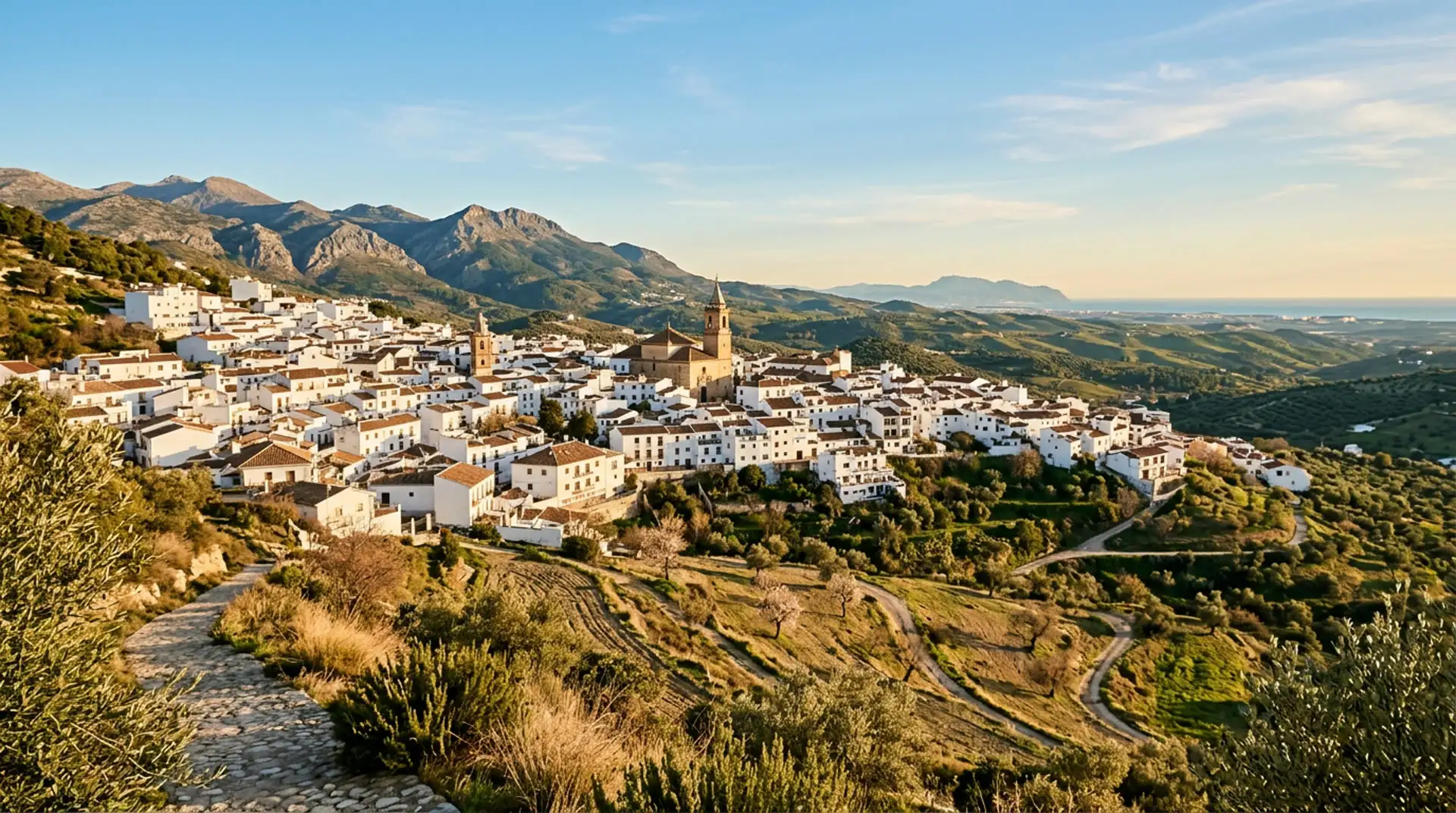
Living in Coín
Coín is a working inland town in the Guadalhorce valley, thirty-seven kilometres from Málaga city and two hundred and eleven metres up. It held 26,574 people in 2025, close to a quarter more than a decade earlier. Cártama gets the headlines as the valley's growth town, but over that same decade Coín added more people and grew faster in proportion too.
The foreign community is now more than a fifth of all residents, 6,026 people, up from about one in six ten years ago. The largest group is British, about three in ten of the foreign residents. Asking prices rose by about a tenth in the year to July 2026 and sit just below the peak the town hit in June. Coín is dearer than Álora and cheaper than Alhaurín de la Torre.
What sets Coín apart inland is the depth of its services. There is a full public health centre, three secondary schools, three sixth-form centres, three vocational centres, an official school of languages, a public library and a municipal school of music and dance. There is no railway; the inland Cercanías line stops well short of the town, and Coín runs on buses instead, with four routes to Málaga alone. For a family moving with children, the schools matter more than a sea view.
The verdict
Honestly considered, both sides.
The upside is real. So is the downside. Both matter more than any brochure will admit.
The case for
Services rare in an inland town this size
A full public health centre, three secondary schools, three sixth-form centres, three vocational centres, an official school of languages, a library and a municipal school of music and dance. Families rarely need to leave town for the basics.
Steady growth without the Cártama headlines
The town added close to five thousand residents in a decade, growing faster than Cártama in both proportion and headcount. Growth on that scale supports shops, schools and bus routes.
Six bus routes for a town with no station
Four routes run to Málaga and two to Fuengirola, one of them summer only, plus services to Alhaurín el Grande and Cártama. For an inland town with no station, that is an unusual spread.
Priced between Álora and Alhaurín de la Torre
Asking prices sit above Álora and below Alhaurín de la Torre, rising by about a tenth over the year to July 2026 and sitting just below the peak set in June.
An established British and foreign community
More than a fifth of residents are foreign nationals, and about three in ten of them are British. Newcomers find schools, tradespeople and neighbours already used to international arrivals.
The case against
No train, and the line stops well short
The inland Cercanías line serves Cártama, Aljaima, Pizarra and Álora and stops well short of Coín. Every commute to Málaga is a bus or a car. If a station is essential, buy in Cártama.
One price figure for a very varied municipality
The index publishes a single figure for the whole municipality: five settlements plus nearly five thousand people in scattered dwellings. Compare like with like on plot size and access, and treat the headline number as a starting point only.
Summers run hotter than the coast
At two hundred and eleven metres and well inland, there is no sea breeze to take the edge off August. Budget for shade, insulation and cooling, and expect the hottest afternoons indoors.
A working town, and the sea is a drive
Coín serves its own residents and does not pretend to be a white village. The coast is reached by the road down towards Fuengirola and Mijas, and there is no quick way to the water.
English is easy to live in here
The foreign community is large enough that parts of daily life run in English. That softens the landing, and it also makes it easy to stay outside Spanish life entirely. Decide which you want before you commit.
Editor's note
Where you might be better off elsewhere
We rate Coín highly for one kind of buyer: families who want an inland town where the schools, health centre and bus network do the work a coastline cannot. We would not put you here if you need a train, if you want the sea within a few minutes, or if you are chasing a postcard white village; Coín is a working service town and does not pretend otherwise. The single municipal price figure also makes it a poor fit for anyone who wants clean comparable data before committing; you will be comparing plots and access yourself. If the train is essential, buy in Cártama; the Cercanías line stops there and it is the valley's other growth town. If you want the beach daily, look at Fuengirola or Mijas and accept the crowds. Álora is the answer if you want cheaper inland property with a station in the municipality, if not in the town. Alhaurín el Grande sits on the same road and is worth pricing against Coín before you sign anything. Come to Coín for the services and the growth. Come somewhere else for the view.
Lifestyle data
Property market
Updated 2026-08-30
Access
Community
Amenities
Coín on the map
Coín FAQ
Honest answers to the questions buyers actually ask.
Does Coín have a train station?+
Is Coín in the Sierra de las Nieves national park?+
How reliable is the average price figure for Coín?+
What are the main settlements in the municipality?+
What are the schools like in Coín?+
How big is the foreign community in Coín?+
How do I get from Coín to Málaga and the coast?+
What are the costs of buying property in Coín?+
What are the ongoing costs of owning property in Coín?+
What taxes do I pay when selling property in Coín?+
Can I still get a Golden Visa by buying property in Spain?+
Transfer tax rates as of August 2026. Rates are set per autonomous community and do change. Confirm the current figures with a Spanish lawyer or tax adviser before you budget.
Local Experts
Deep knowledge of Coín and its real estate market.
Personalized Service
We accompany you throughout the entire process, from search to closing.
Exclusive Portfolio
Access to the best properties before they reach the market.
Spain's first AI-Powered platform
Our AI technology matches you with perfect properties faster than traditional search.
New to buying property in Spain?
Our step-by-step guide covers everything foreign buyers need to know, NIE numbers, Golden Visa, mortgages and the legal process.
Calculate your Spanish mortgage
Estimate monthly payments, compare loan scenarios and understand the true cost of buying in Spain.